

THE JOURNAL
Live bright, every day
Practical, reviewed wellness reading. Every article links to the ingredient and category it covers.
Everyday care
Why do I keep getting spots as an adult, and what can I do?
Adult breakouts usually come from hormones around your period, stress, skin or hair products, touching your face, masks, sweat and some medicines. Wash gently up to twice a day and after sweating, leave spots alone, sleep enough and look after stress. If they continue, see a dermatologist.
Everyday care
Why do my nails break easily and peel in layers?
Brittle, peeling nails usually come from everyday wear: hands wet and dried often, cleaning products, polish remover, gel or acrylic nails, and age, usually not a lack in your body. Moisturise, wear gloves, keep nails short and file one way. See a dermatologist if a nail changes colour or shape.
Everyday care
Why does my skin look dull and tired, and what can I do?
Dull, tired-looking skin often comes from daily sun through clouds and windows, too little or no reapplied sunscreen, dry skin, short sleep, smoking and alcohol. From the inside: sleep 7+ hours, stop smoking, drink less, eat fruit and veg. See a dermatologist if marks or skin colour change fast.
Everyday care
Hard to get up and tired by afternoon. What can I do?
Heavy mornings usually come from too little or irregular sleep, plus a groggy spell after waking that normally lasts under 30 minutes. Afternoon tiredness comes from a natural dip in alertness. Instead of coffee: a steady wake time, a 15-minute walk, a short nap, smaller meals and enough water.
Everyday care
Itchy, red eyes in PM2.5 haze season: what can I do?
Dust and smoke in PM2.5 haze irritate the eye, causing itching, redness and watering. Don't rub; wash hands first; use a cool compress; skip contact lenses while red; wear glasses outdoors; keep windows shut; check the air quality colour. See a doctor for pain, vision changes or light sensitivity.
Everyday care
Why do I lose focus halfway through, and what can I do?
Losing focus halfway through a meeting, a long drive or revision usually comes from short sleep, long stretches without a break, and the after-lunch slump; phone alerts can distract too. Sleep enough, work in blocks with real breaks, silence alerts, and on long drives stop at least every 2 hours.
Everyday care
Leg cramps wake me up at night. Am I lacking something?
Night leg cramps rarely mean you lack one nutrient. Often there is no clear cause, but age, hard muscle use, long sitting or standing, pregnancy, some medicines and low fluids can play a part. Stretch and massage the calf during a cramp, stretch before bed, and see a doctor rather than guessing.
Everyday care
Working night shifts and always tired: what can I do?
Night-shift workers often feel tired because they work against their body clock and daytime sleep is shorter and lighter, so sleep loss builds up. Look first at sleep timing, light, caffeine and meals. Ask a doctor or pharmacist before starting any supplement. If tiredness lasts weeks, see a doctor.
Everyday care
Menopause night sweats keep me awake. How can I cope?
Hormone changes around menopause unsettle your body's temperature control. Cool the bedroom with a fan and light bedding, keep cold water by the bed, avoid spicy food, caffeine, alcohol and smoking, and exercise. See a doctor if they disrupt life or come with fever or unexplained weight loss.
Everyday care
Older parents waking up at night: how can family help?
With age, sleep gets earlier, lighter and more broken. Toilet trips, aches, late naps and little daylight often wake them. Family can help with daylight and activity by day, fewer evening drinks and a lit path to the bathroom. Snoring with pauses in breathing or night confusion needs a doctor.
Everyday care
Stress gives me diarrhoea then constipation. What can I do?
Your gut has nerves linked to your brain, so stress can speed up or slow down digestion, causing diarrhoea, constipation or bloating. The NHS suggests regular, slow meals, enough fluids, less caffeine and alcohol, and exercise. See a doctor if it lasts over 4 weeks, or for weight loss or blood.
Everyday care
Stress keeps building up. How do I spot it and cope?
Built-up stress lasts weeks or months with no break. Signs: irritability, poor focus, tense muscles, sleeping or eating more or less. Move daily, breathe deeply, talk to someone you trust, end work on time and skip caffeine and alcohol at night. If you can't cope or daily life suffers, see a doctor.
Everyday care
Can't sleep because your mind won't stop thinking?
If you are still awake after about 20 minutes, the NHS suggests getting up, doing something relaxing and returning to bed when sleepy, not lying there for an hour. For racing thoughts, write down tomorrow's tasks or worries before bed, wind down for an hour, and get up at the same time every day.
Signs & signals
Why does my eye twitch and my vision blur by evening?
Eye twitching is mostly linked to stress, tiredness, and caffeine or alcohol, and usually stops within days or weeks. Evening blur usually comes from a day of close-up focus and less blinking. Rest your eyes and sleep enough; see a doctor if a twitch lasts over 2 weeks or vision blurs suddenly.
Everyday care
I always get ill when busy or travelling. How do I prepare?
The year-end rush and frequent travel bring short sleep, crowds, irregular meals and time-zone changes. Prepare in stages: sleep 7+ hours before the busy period, wash hands and drink enough on the way, reset your body clock with daylight on arrival, and see a doctor a month before trips abroad.
Everyday care
Stiff fingers on waking, sore knees after new exercise: why?
Morning finger stiffness is common and can relate to repetitive hand use, age or menopause; see a doctor if it lasts over 30 minutes after waking (NHS). Knee pain after starting exercise often comes from overuse, building up too fast, poor technique or unsupportive shoes. Rest and ice it first.
Everyday care
What causes constipation, and how can I look after myself?
Constipation is usually down to too little fibre, too little fluid, too little movement, holding it in, or a change in routine such as travel. The NHS suggests: add fibre-rich foods gradually, drink enough, walk every day and go at the same time. See a doctor if it does not improve or you see blood.
Signs & signals
Why do women lose hair, and how much is too much?
Losing 50 to 100 hairs a day is normal. Heavier shedding in women is usually temporary, often after stress, childbirth, rapid weight loss, illness or tight hairstyles. After giving birth it peaks around month 4 and settles by the baby's first birthday. See a doctor for patches, itching or pain.
Ingredient guide
Slept a full night but still not refreshed?
Sleep quality matters just as much as how many hours you sleep. Looking after both a relaxed mind and a relaxed body may be one way to support better sleep.

Signs & signals
Always tired, low on energy, foggy-headed... could you be missing a nutrient?
Tiredness can sometimes be linked to not getting enough iron. Iron plays a role in making red blood cells, alongside vitamin C, vitamin B6, vitamin B12, folate and amino acids.
Ingredient guide
Good immunity isn't just about being strong. It's about balance
A healthy immune system doesn't always mean one that works as hard as possible. Caring for immunity is less about stimulating it and more about helping the body work in balance, through everyday habits and nutrients with different roles.

How it works
A tired brain isn't only about thinking too much. It may need the right nutrients, too
Beyond hard work and rest, nutrients such as B vitamins, choline and zinc are involved in the basic biochemical processes that help the body and brain work normally.
Ingredient guide
What is iron, and which foods contain it?
Iron is a mineral the body has to get from food, and most of it sits in the haemoglobin of red blood cells. It is found in meat, seafood and poultry, as well as beans, nuts, vegetables and fortified foods. The Thai Reference Daily Intake (Thai RDI) for iron is 22 mg a day.
How it works
Which foods are high in iron, and what helps absorption?
Plenty of everyday Thai food is already high in iron; what changes the outcome is what you eat alongside it, because vitamin C increases iron absorption.
How it works
Why does the iron figure differ for men and women?
Iron requirements differ by sex and life stage: the recommended intake for women aged 19 to 50 is more than double that for men of the same age, and the figure for the next age band is lower.
Ingredient guide
What is folate, and what does it do in the body?
Folate is vitamin B9, and it contributes to normal red blood cell formation, normal amino acid synthesis and the normal function of the immune system.
Ingredient guide
Which nutrients does bone need?
Bone needs more than calcium. Calcium, vitamin D, magnesium and protein each have a role in maintaining normal bone, and each does a different job.
Ingredient guide
What does magnesium do, and which foods contain it?
Magnesium is a component of bones and teeth, and contributes to normal muscle and nerve function, electrolyte balance, energy-yielding metabolism and protein synthesis. Foods with magnesium include pumpkin seeds, almonds, leafy greens, beans and brown rice. The Thai RDI is 310 mg a day.
Ingredient guide
What is omega-3, and how do DHA and EPA differ?
Omega-3 is a family of essential fatty acids. ALA comes from plants, while DHA and EPA come from oily sea fish and certain algae.
Everyday care
Where does sodium hide in Thai food?
In Thai cooking most sodium comes from seasonings such as fish sauce, soy sauce and seasoning powder rather than from salt added at the table. The WHO recommends adults take in less than 2,000 mg of sodium a day.
Everyday care
Which fats should you cook with day to day?
Fat is not simply good or bad. In everyday cooking the point is the balance between types of fat — which oil, how often coconut milk appears, how food is cooked — not cutting fat out.
Ingredient guide
How many B vitamins are there, and how do B1 and B2 differ?
There are 8 B vitamins: B1 contributes to normal energy-yielding metabolism from carbohydrate; B2 to normal energy-yielding metabolism, nervous system, skin, vision and more. Get B vitamins from a varied diet; more than you need adds nothing. If you keep tiring easily, see a doctor.
Ingredient guide
What is calcium, and how much do you need?
Calcium is the most abundant mineral in the body, needed for the maintenance of normal bones and teeth, and also involved in muscle function, neurotransmission and normal blood clotting.
Ingredient guide
What is the difference between probiotics and prebiotics?
Probiotics are live microorganisms; prebiotics are food components that the microorganisms in the gut can use. The two terms mean different things.
How it works
How do you add fibre to a Thai diet?
Fibre comes in soluble and insoluble forms, and in Thai cooking the amount can usually be increased without changing what you eat.
Everyday care
Do fermented foods contain probiotics?
Fermented food and probiotics are not the same term. Some fermented foods contain live microorganisms; others do not, because they have been heat-treated.
Ingredient guide
Is retinol the same thing as dietary vitamin A?
Retinol applied to skin and vitamin A obtained from food are the same molecule, but the route is different. Vitamin A from food has its own roles in the body's normal workings.
Ingredient guide
What happens to collagen you eat?
Eaten collagen is a protein: it is broken down into amino acids, absorbed into the blood and used as the body needs, like protein from any other food. Dry skin despite moisturiser usually relates to hot showers, harsh soaps, dry air and how cream is applied, so care starts outside.
Ingredient guide
How is vitamin C related to skin?
Vitamin C contributes to normal collagen formation for the normal function of skin. Several nutrients have roles in normal skin, and vitamin C is the one tied to collagen.
Everyday care
How do you look after skin day to day in a hot climate?
Skin care in a hot climate is mostly a matter of daily routine: sun protection, fluids, sleep and a varied diet.
Ingredient guide
Which nutrients support normal hair, and what does zinc do?
The nutrients that help support normal hair are zinc and biotin. Get them from a varied diet, along with enough sleep. Zinc also helps support nails and skin and contributes to normal DNA and protein synthesis. It is found in meat, seafood, eggs and dairy. More than you need adds no extra benefit.
How it works
Which nutrients are linked to growth?
Zinc contributes to growth, protein contributes to growth and tissue repair, and vitamin A has a role in body growth. All three come from everyday foods.
Ingredient guide
What do vitamins B12 and B6 do, and where do they come from?
Vitamins B12 and B6 contribute to the normal function of the nervous system and to normal energy-yielding metabolism. Vitamin B12 occurs naturally in animal foods, while vitamin B6 is found in both animal and plant foods. Also covers how vitamin B12 is absorbed and how much is needed per day.
How it works
What should change about nutrition after fifty?
After fifty some requirements go up, such as calcium for women, and vitamin D rises later, above seventy. Women's iron requirement goes down.
Everyday care
Which plant foods have protein? How much do you need a day?
Plant protein comes from soybeans and tofu; pulses such as mung beans, lentils and chickpeas; nuts and seeds such as peanuts, almonds and sesame; and grains such as brown rice. The Thai Reference Daily Intake (Thai RDI) for protein is 50 g a day, counted from all sources that day.
Everyday care
How should you use your eyes on a long screen day?
Working at a screen is about distance, lighting and the rhythm of breaks, and most of it can be adjusted immediately without buying anything.
How it works
Which nutrients relate to normal vision?
Vitamin A, zinc and riboflavin contribute to the maintenance of normal vision. All three come from ordinary foods, so variety across the week is the practical step.
How it works
Office job: how to look after your immune system day to day?
Working in an office all day? Look after your immune system day to day with enough sleep, regular, varied meals and moving during the day. Get nutrients that help support the immune system, such as vitamins C, D and A, zinc, iron, folate, B6 and B12, from food. More than you need adds nothing.
How it works
How does the body get vitamin D in a sunny country?
Vitamin D is made when skin is exposed to sunlight, but indoor life, sunscreen and clothing mean how much is actually made varies a great deal.
Everyday care
What should active people watch with protein and iron?
For people who train, the practical points are few: protein spread across meals, what iron does in the body, and enough fluid in the heat.
Everyday care
How do you read PM2.5 and AQI figures?
PM2.5 and AQI are different numbers, and a 24-hour average is not the same as a 1-hour average. Read them correctly before planning the day.
Ingredient guide
What is quercetin, and which foods contain it?
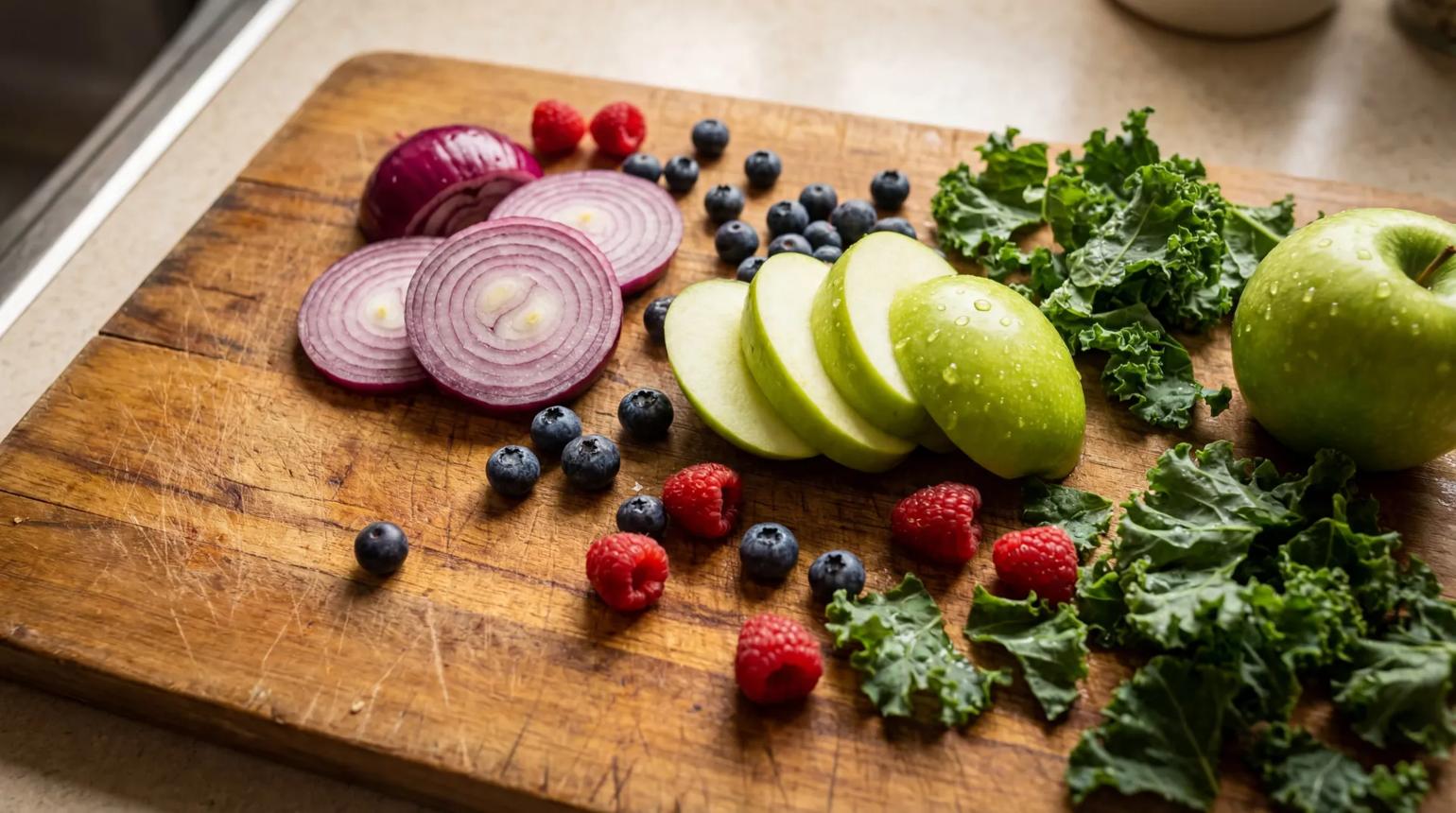
Quercetin is a flavonoid that occurs naturally in many plants, particularly shallots, onions, apples and tea.
Ingredient guide
What are essential amino acids?
Protein is built from amino acids. The body can make some of them and cannot make others; the second group are called essential and have to come from food.
Everyday care
How do you build a study schedule that holds up?
During exam preparation, what can actually be controlled is sleep timing, the rhythm of breaks, and the desk environment.
How it works
How do recommended intakes change with age?
Daily reference intakes are not fixed across a lifetime. Some rise with age and some fall, and the second part is the one usually missed.
Ingredient guide
What is soy germ, and which part of the bean is it?
Soy germ is the part of the soybean that would grow into the seedling. It is a small part of the bean compared with the cotyledons and carries isoflavones at a higher concentration than the cotyledons, which make up most of the bean.
Ingredient guide
What is dong quai, and which plant does it come from?
Dong quai is the root of Angelica sinensis, a plant in the genus Angelica and the same family as coriander and carrot. The root is the part used, and it contains compounds such as ferulic acid and ligustilide.
Ingredient guide
What is evening primrose oil, and where does it come from?
Evening primrose oil is the oil extracted from the seeds of Oenothera biennis, a plant native to North America and also grows in Europe and parts of the Southern Hemisphere. The oil contains omega-6 fatty acids, including gamma-linolenic acid (GLA).
Ingredient guide
What is Zinc?
Zinc is an essential trace mineral the body cannot store in quantity, so a small amount is needed from food every day. The Thai Reference Daily Intake (Thai RDI) for zinc is 11 mg a day.
How it works
What are AGEs, and how do they relate to collagen in skin?
AGEs (advanced glycation end products) are compounds formed when sugars attach to proteins without an enzyme. In skin, they accumulate in the collagen and elastin of the dermis because those proteins turn over slowly; type I and type IV collagen have a slow turnover of about 10 years.
Everyday care
Lighter sleep with age: how can you adjust your sleep?
With age, deep sleep decreases and night-time waking becomes more frequent, a common change with age. This article explains how sleep works and answers common questions on phones before bed, weekend catch-up sleep, sleeping after a night shift, caffeine and alcohol, and daily habits you can adjust.
Everyday care
Weather keeps changing and I get ill easily. What can I do?
Getting ill when the weather changes relates more to sleep and daily routines that shift with it than to the weather itself. No vitamin can be said to keep you well. Sleep 7+ hours, wash your hands with soap for 20 seconds, and stay active.
Ingredient guide
What is acerola, and how much vitamin C does it contain?
Acerola cherry is a small tart fruit and one of the most concentrated natural food sources of vitamin C.
Signs & signals
Skin looks tired at 30: where should you start?
Tired-looking skin in your 30s and fine lines around the eyes come from natural ageing plus years of sun. Start with SPF 30+ sunscreen daily, gentle cleansing twice a day, daily moisturiser, sunglasses instead of squinting, no smoking, enough sleep.
Everyday care
Want to sleep better? Which habits can you change?
Many things are in your own hands. US health agencies advise a fixed bedtime and wake time, devices off 30 minutes before bed, no caffeine from the afternoon, no large meals or alcohol before bed, naps of 20 minutes or less, and a quiet, dark, cool room. Adults need 7+ hours, not exactly 8.
Ingredient guide
What Does Magnesium Do for Bones, Muscles and Energy?
Magnesium is a cofactor in hundreds of enzyme reactions and contributes to normal bones and teeth, muscle and nervous system function, and energy metabolism. The Thai Reference Daily Intake (Thai RDI) for magnesium is 310 mg a day.
Everyday care
Dry, dull skin in summer, oily in rainy season: how to care?
Dry, dull-looking skin in the hot season, or oily skin and breakouts in the rainy season, come mainly from UV, sweat, oil and air conditioning. The main care is daily sunscreen even when cloudy, gentle cleansing twice a day and after sweating, non-comedogenic products and moisturiser.
How it works
Phone and computer all day: does blue light harm skin?
Research has not found that blue light from phones and computers harms skin. A 2022 systematic review did not classify screen blue light as a hazard to skin colour or light-related skin changes. Sunlight is the largest source. What to do: daily sunscreen, screen breaks, and no screens before bed.
How it works
What Do B Vitamins Do for the Brain and Nerves?
B vitamins are water-soluble and the body stores little of them, so regular daily intake matters. Several contribute to normal energy metabolism and the normal functioning of the nervous system, and B12 to the normal function of the brain and nervous system.
How it works
Sensitive, easily irritated skin: how do you care for it?
Sensitive, easily irritated skin and skin dried out by air conditioning are cared for mainly from the outside, not with food or drink: lukewarm water, soap-free fragrance-free cleansers, moisturiser on damp skin, stopping products that sting, testing new products and indoor humidity of 30-50%.
—
Page 1 of 8
Filter products
BY CATEGORY
BY INGREDIENT
SORT BY

This website uses cookies
We use cookies to improve performance and give you a better experience on this website. If you accept, we can show you content that better matches your interests. You can change your consent at any time via “Cookie settings”. Cookie policy
Strictly necessary cookies
Required for core functions such as page navigation and language preference.
Site functionality cookies
Remember your settings and preferences, such as language, for a more convenient visit.
Analytics cookies
Help us understand how the site is used — including heatmaps and session replay — so we can improve it.
Marketing cookies
Used to show content and offers that match your interests.